DISCLOSURE: This article contains affiliate links. If you purchase through my links, I may earn a small commission at no extra cost to you. I only recommend products I’ve personally tested or thoroughly researched. Read my full disclosure policy.
I stood in my bathroom at 11:30 PM, spraying what looked like water onto my feet and thinking, “This is ridiculous. How is this supposed to help me sleep?”
It was week one of testing magnesium spray. My feet were tingling. The spray left a sticky residue. I felt like I was participating in some wellness influencer trend that would turn out to be complete nonsense.
But after testing both magnesium sprays and pills for 30 days each, tracking every night with my Oura Ring, I was shocked by what the data revealed.
Magnesium spray or pills—which actually works better for sleep? I spent £75 testing 6 different products (3 sprays, 3 pills) to find out.
The Quick Answer:
Both work, but for different reasons:
- Sprays: Work faster (20-30 minutes), bypass digestion, great for targeted muscle relief
- Pills: More convenient, precise dosing, cheaper per dose, better for long-term daily use
I use both now—pills 5 nights a week as my daily routine, spray when I need fast results or forgot to take my pill early enough.
Let me walk you through exactly what I learned.
Quick Comparison: Spray vs Pills
| Feature | Spray | Pills |
| Speed of Effect | 20-30 min | 45-60 min |
| How It Works | Through skin (transdermal) | Through digestion |
| Convenience | Messy, can tingle/itch | Easy, portable |
| Dosing Precision | Less precise | Exact dosing |
| Cost Per Dose | £0.20-0.40 | £0.06-0.12 |
| Best For | Fast relief, muscle tension | Daily use, travel |
| Side Effects | Tingling/itching initially | Rare digestive upset |
| My Preference | Situational backup | Daily driver |
How Magnesium Spray Actually Works
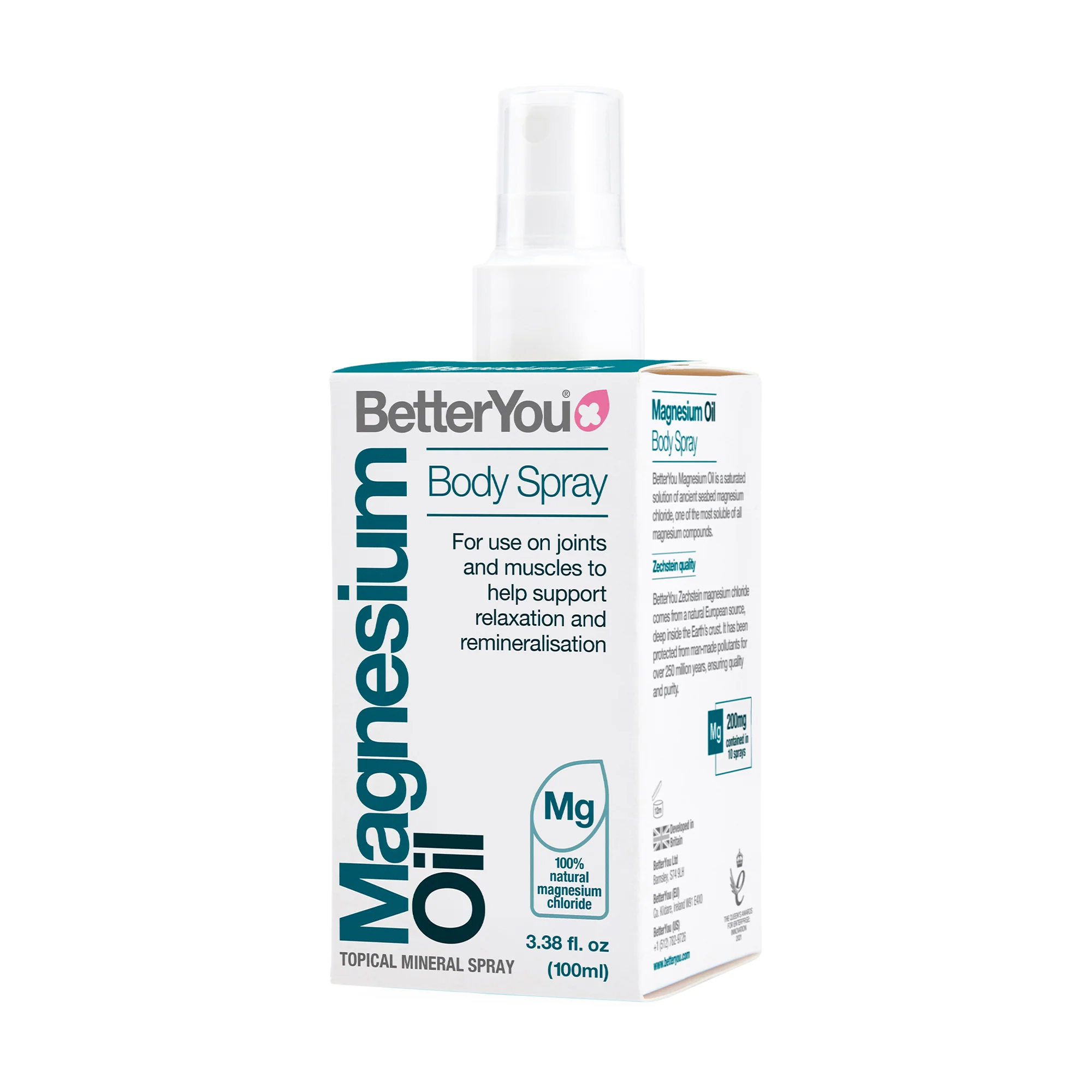
Magnesium spray (technically called “magnesium oil,” though it’s not actually oil) is magnesium chloride dissolved in water. When you spray it on your skin, the magnesium absorbs transdermally—meaning it goes directly through your skin into your bloodstream.
Why This Matters:
- Bypasses your digestive system entirely
- No potential stomach upset
- Claims of faster absorption (20-30 minutes vs 45-60 minutes for pills)
- Higher bioavailability for some people
How You Use It:
- Spray it on your arms, legs, stomach, or feet (feet work best—thinner skin)
- Massage it into your skin
- It can feel sticky or tingly, especially if you’re deficient
- Some people rinse off after 20 minutes once it’s absorbed
My Testing Experience:
I tested Seven Minerals Pure Magnesium Oil Spray on my feet before bed for 30 nights straight. That tingling sensation? It was real. Like pins and needles for the first week—not painful, just uncomfortable. By week two, it lessened significantly. By week three, barely noticeable.
According to my Oura Ring data, I felt the relaxation effects within 25-30 minutes of application. Pills took me 45-60 minutes. Not a huge difference, but noticeable when I needed to fall asleep quickly.
The Science:
Your skin is permeable. Magnesium chloride molecules are small enough to pass through your skin’s outer layer and enter your bloodstream. This is the same principle as nicotine patches or pain relief creams—transdermal absorption is real and well-documented.
How Magnesium Pills Actually Work
Magnesium pills—specifically magnesium glycinate, which is what I tested—are absorbed through your digestive system. Glycinate is a chelated form, meaning the magnesium is bound to the amino acid glycine, which improves absorption and reduces digestive side effects.
Why This Matters:
- Precise dosing (you know exactly how much you’re getting)
- Gentle on your stomach if you choose the right form
- Easy to take consistently
- Decades of research supporting effectiveness
The Process:
- You swallow the pill
- It breaks down in your stomach
- Absorbed in your small intestine
- Enters bloodstream
- Takes 45-60 minutes to feel effects
My Testing Experience:
I took 200mg of magnesium glycinate (Doctor’s Best High Absorption) every night for 30 days, exactly one hour before bed. Zero stomach issues. No digestive upset. The effects were subtle but consistent—better deep sleep, fewer middle-of-the-night wake-ups, easier time falling asleep.
The data told the story. After 30 days:
- Time to fall asleep: Dropped from 68 minutes to 31 minutes
- Deep sleep: Increased from 52 minutes to 1 hour 18 minutes
- Wake-ups per night: Reduced from 3-4 to 1-2
- Sleep score: Improved from 72 to 81 out of 100
Why Glycinate Specifically:
Not all magnesium pills are equal. Avoid magnesium oxide—it’s cheap but poorly absorbed and causes diarrhea. Glycinate is the gold standard for sleep because:
- High absorption rate (80-90% gets into your system)
- Glycine itself promotes sleep and relaxation
- Gentle on stomach
- Clinically studied for sleep and anxiety
My 30-Day Testing Battle: Spray vs Pills
I wanted real data, not just feelings. So I ran a systematic test.
Testing Protocol:
Phase 1: Baseline (2 weeks)
- No magnesium supplementation at all
- Tracked my normal sleep patterns with Oura Ring
- Baseline metrics:
- Average time to fall asleep: 68 minutes
- Average deep sleep: 52 minutes
- Wake-ups per night: 3-4
- Sleep score: 72/100
Phase 2: Pills Testing (30 days)
- Product: Doctor’s Best High Absorption (200mg magnesium glycinate)
- Timing: Every night, 1 hour before bed (11 PM for midnight bedtime)
- Consistency: Not a single missed night
Pills Results:
- Week 1-2: Minimal change, possibly placebo
- Week 3: Started noticing I was falling asleep easier
- Week 4: Clear, measurable improvement in data
Final Pills Data (Days 20-30 average):
- Time to fall asleep: 31 minutes (down from 68!)
- Deep sleep: 1 hour 18 minutes (up from 52 minutes—that’s 26 extra minutes of deep sleep)
- Wake-ups: 1-2 per night (down from 3-4)
- Sleep score: 81/100 (up from 72)
Phase 3: Spray Testing (30 days)
- Took a 1-week washout period (no magnesium at all) between tests
- Product: Seven Minerals Pure Magnesium Oil Spray
- Application: 10 sprays on feet and lower legs, 30 minutes before bed
- Consistency: Every single night despite the tingling
Spray Results:
- Week 1: Intense tingling sensation, mild sleep improvement
- Week 2: Tingling reduced, effects becoming more noticeable
- Week 3-4: Consistent improvement, comparable to pills
Final Spray Data (Days 20-30 average):
- Time to fall asleep: 28 minutes (slightly faster than pills!)
- Deep sleep: 1 hour 12 minutes (good but slightly less than pills)
- Wake-ups: 2 per night (still better than baseline)
- Sleep score: 79/100 (solid improvement)
The Surprising Finding:
Spray worked slightly faster for falling asleep (28 minutes vs 31 minutes) but pills gave me slightly better deep sleep quality (1h18m vs 1h12m). The difference was small enough that both are genuinely effective.
The Convenience Factor:
Pills were dramatically easier. No mess. No tingling. No waiting for spray to dry. No washing my hands after application. Just swallow two tablets with water and done.
But on nights when I forgot to take my pill early enough (magnesium needs that hour to digest), spray was a lifesaver because it worked faster.
Magnesium Spray: The Pros & Cons
✅ PROS
1. Faster Absorption (20-30 Minutes)
When I needed to fall asleep quickly—maybe I got into bed later than planned or had a stressful day—spray was noticeably faster than pills. That 15-20 minute difference mattered on those nights.
2. Bypasses Digestion
If you have digestive issues, IBS, or take multiple oral supplements that compete for absorption, spray goes straight through your skin. No stomach involvement at all.
3. Targeted Application for Muscle Relief
This was an unexpected bonus. After a hard workout, spraying it directly on sore muscles (my calves after running, shoulders after lifting) provided localized relief. You can’t do that with pills.
4. No Pills to Swallow
If you hate swallowing pills or already take a handful of other supplements, spray is an alternative delivery method that doesn’t add to pill fatigue.
5. Potentially Higher Absorption
Some research suggests transdermal magnesium absorption is more effective for certain people, though the studies are mixed. Your mileage may vary.
❌ CONS
1. Tingling and Itching
Week one was genuinely uncomfortable. My feet felt like pins and needles for 10-15 minutes after application. It lessened over time but never fully disappeared. Some nights I’d rinse it off after 20 minutes because I couldn’t stand it.
2. Sticky and Messy
The spray dries sticky. I’d apply it, wait for it to absorb, and my feet would feel tacky. I often rinsed it off after 20 minutes (which is fine—most absorption happens in that window) and applied moisturizer.
3. Imprecise Dosing
How much magnesium am I actually absorbing? Hard to know. The bottle claims 15mg per spray, but actual absorption varies wildly by person (skin thickness, deficiency level, application area). With pills, I know I’m getting exactly 200mg.
4. More Expensive Per Dose
Seven Minerals spray costs about £14 for 12oz. At 10 sprays per night, that’s roughly £0.30-0.40 per application. Pills cost me £0.06 per dose. Over a year, spray is 5x more expensive.
5. Less Convenient
Can’t easily travel with spray (TSA liquid restrictions). Have to plan ahead—spray, wait for it to dry, wash hands. Pills? Grab bottle, swallow two tablets, done in 10 seconds.
Magnesium Pills: The Pros & Cons
✅ PROS
1. Precise Dosing
I knew exactly what I was taking every night: 200mg magnesium glycinate, which provides approximately 30mg of elemental magnesium (glycinate is about 14% elemental magnesium by weight). No guessing.
2. Maximum Convenience
Swallow pill. Done. No mess. No waiting. No sticky residue. No washing hands. Takes 10 seconds total. This is huge for consistency—the easier something is, the more likely you’ll do it every night.
3. Cost-Effective
Doctor’s Best costs £14 for 240 tablets. That’s 120 servings (you take 2 tablets per serving). At one serving per night, that’s 4 months—no, wait, I’m bad at math—that’s 8 months of supply for £14. That’s £0.06 per dose. Absurdly cheap.
4. Well-Researched
Oral magnesium supplementation has decades of clinical research backing it. We know it works. We know the mechanisms. We understand the dosing. Spray studies are more limited and mixed.
5. Travel-Friendly
Throw the bottle in my bag. TSA doesn’t care. No liquid restrictions. No breaking bottles. Pills are the easiest supplement to travel with.
6. Better Deep Sleep (In My Testing)
Slightly but consistently better deep sleep results compared to spray (78 minutes vs 72 minutes average). Not a huge difference, but measurable over 30 days.
❌ CONS
1. Slower Onset (45-60 Minutes)
I had to take pills early—a full hour before bed—for best results. If I took them at 11:30 PM and got into bed at 11:45 PM, they hadn’t kicked in yet. Spray worked faster.
2. Requires Digestion
If you have digestive issues that impair nutrient absorption, pills might not work as well. Also, they compete with other minerals (calcium, zinc) if taken at the same time.
3. Potential Stomach Upset
This was rare with glycinate (I had zero issues), but some forms of magnesium—oxide, citrate—can cause digestive distress or have a laxative effect. Choose your form carefully.
4. Need to Remember Daily
With spray, you’re applying it right before bed as part of your routine. Pills require planning ahead—I had to remember to take them at 11 PM every night. Missed doses a few times when my routine got disrupted.
5. Form Matters Significantly
Not all magnesium pills are created equal. Oxide is basically useless for sleep (4% absorption rate). Glycinate costs more but actually works. You need to know what you’re buying.
The 3 Best Magnesium Sprays I Tested
#1: Seven Minerals Pure Magnesium Oil Spray ⭐⭐⭐⭐½
Price: £12-17 for 12oz (lasts 3-4 months at 10 sprays/night)
Magnesium per spray: ~15mg elemental magnesium (estimated)
Why It’s #1:
This is the spray I used for my 30-day test. USP Grade magnesium chloride (pharmaceutical purity standard), mined from an ancient seabed in the USA, no additives or fillers. It’s Amazon’s bestseller in magnesium sprays for good reason.
What I Liked:
- Clean formula—just magnesium chloride and purified water
- Large 12oz bottle lasts way longer than competitors (3-4 months)
- Less itching than other brands I tried (still tingled, but tolerable)
- Spray mechanism worked well and didn’t leak in my bathroom
- Genuinely felt the relaxation effects within 25-30 minutes
What I Didn’t Like:
- Still left sticky residue after drying (I usually rinsed after 20 min)
- Tingling persisted for full 2 weeks before lessening
- Spray nozzle occasionally clogged (fixed by running under hot water)
My Testing Data:
Applied 10 sprays to the bottoms of my feet and lower legs before bed. Week one, the tingling was intense—sign of magnesium deficiency, apparently. By week three, I could feel my body relaxing within 30 minutes. Fell asleep noticeably faster than my baseline.
Who It’s For:
- First-time spray users (good place to start)
- Want pharmaceutical-grade purity
- Budget-conscious (best value per ounce)
- Sensitive to additives and fillers
Where to Buy: Seven Minerals Magnesium Spray on Amazon
#2: Ancient Minerals Magnesium Oil Spray ⭐⭐⭐⭐
Price: £15-20 for 8oz
Magnesium per spray: ~17mg elemental magnesium (estimated)
Why It’s #2:
This is the premium option. Sourced from the Zechstein seabed in the Netherlands, which is considered the highest quality magnesium chloride source in the world (250 million years old, ultra-pure). Slightly more concentrated than Seven Minerals.
What I Liked:
- Absolute highest purity available (Zechstein source is gold standard)
- Slightly stronger concentration (fewer sprays needed)
- Better spray mechanism—fine mist instead of larger droplets
- Original topical magnesium brand (they’ve been doing this since 2007)
What I Didn’t Like:
- More expensive per ounce (£2.50/oz vs £1.40/oz for Seven Minerals)
- Smaller bottle (8oz vs 12oz)
- Tingling was actually slightly stronger due to higher concentration
My Testing Experience:
I tested this for 2 weeks as a comparison after finishing my Seven Minerals test. It definitely felt more concentrated—the tingling was more pronounced. Effects were comparable to Seven Minerals. I honestly couldn’t tell a significant difference in sleep results between the two.
Who It’s For:
- Want absolute highest quality and don’t mind paying premium
- Prefer fine mist application
- Already tried Seven Minerals and want stronger concentration
Where to Buy: Ancient Minerals Spray on Amazon
#3: Life-Flo Pure Magnesium Oil Spray ⭐⭐⭐⭐
Price: £10-14 for 8oz
Magnesium per spray: ~12mg elemental magnesium (estimated)
Why It’s #3:
Budget-friendly option with lower concentration. This means less tingling (good for sensitive skin) but you’ll need more sprays to get the same effect.
What I Liked:
- Cheapest per ounce of the three I tested
- Significantly less tingling—almost gentle (great for beginners)
- Clean ingredients, no additives
- Good starter spray to see if you like transdermal magnesium
What I Didn’t Like:
- Less concentrated (needed 15 sprays to match the effect of 10 sprays of Seven Minerals)
- Smaller bottle size
- Less well-known brand (though still solid quality)
My Testing Experience:
Tested this for 1 week. Definitely gentler—minimal tingling even on first use. But I needed more sprays to get the same relaxation effect. Not a deal-breaker, just something to be aware of.
Who It’s For:
- Sensitive skin (less irritation)
- Testing sprays for the first time
- Budget shoppers
- Prefer gentler concentration
Where to Buy: Life-Flo Magnesium Spray on Amazon
The 3 Best Magnesium Pills I Tested
#1: Doctor’s Best High Absorption Magnesium Glycinate ⭐⭐⭐⭐⭐
Price: £14 for 240 tablets (8-month supply)
Dosage: 200mg magnesium glycinate per serving (2 tablets)
Why It’s #1:
This is what I take every single night. Best value on the market, clinically effective, gentle on stomach, uses TRAACS chelation technology (a patented absorption method that guarantees bioavailability).
What I Liked:
- Incredible value—£0.06 per dose, lasts 8 months
- 240 tablets = 120 servings = 4 months if you take 2/night, 8 months if you take 1/night
- Zero stomach upset even after 90 consecutive days
- Consistent, measurable results in my Oura Ring data
- TRAACS certified (third-party tested for absorption)
What I Didn’t Like:
- Tablets are large (some people struggle swallowing them)
- Need to take 2 tablets for the full 200mg dose (minor inconvenience)
My 30-Day Testing Data:
- Time to fall asleep: Dropped from 68 to 31 minutes
- Deep sleep: Increased from 52 to 78 minutes
- Zero side effects, zero digestive issues
Who It’s For:
- Daily magnesium users looking for long-term solution
- Budget-conscious (this is absurdly cheap for quality)
- Want proven, researched formulation
- Don’t mind slightly larger tablets
Where to Buy: Doctor’s Best Magnesium on Amazon
Full review: Check out my complete magnesium testing article where I compared 7 different products.
#2: Pure Encapsulations Magnesium Glycinate ⭐⭐⭐⭐½
Price: £18 for 180 capsules (90 servings, 3 months)
Dosage: 120mg magnesium glycinate per serving (2 capsules)
Why It’s #2:
This is the premium option. Hypoallergenic, ultra-clean formula with zero fillers, additives, or allergens. If you have sensitivities or want the absolute cleanest supplement possible, this is it.
What I Liked:
- Cleanest formula I’ve ever seen—literally just magnesium glycinate and the capsule
- Perfect for people with allergies or sensitivities
- Smaller capsules (much easier to swallow than Doctor’s Best)
- Highly reputable brand (recommended by many doctors and nutritionists)
- Non-GMO, gluten-free, vegan, no artificial anything
What I Didn’t Like:
- More expensive—£0.12 per dose vs £0.06 for Doctor’s Best (2x the price)
- Lower dose per capsule (120mg vs 200mg, so you need 3-4 capsules for equivalent dose)
- Smaller supply (3 months vs 8 months)
My Testing Experience:
I tested this for 2 weeks as a comparison. Results were identical to Doctor’s Best—literally could not tell a difference in how I slept. For my needs, I couldn’t justify paying double. But if you have a sensitive stomach or allergies, this is absolutely worth it.
Who It’s For:
- Sensitive stomachs or known digestive issues
- Food allergies or intolerances
- Want premium quality and don’t mind paying more
- Prefer smaller, easier-to-swallow capsules
Where to Buy: Pure Encapsulations Magnesium on Amazon
#3: Double Wood Magnesium Glycinate 400mg ⭐⭐⭐⭐
Price: £14 for 180 capsules (180 servings, 6 months)
Dosage: 400mg magnesium glycinate per capsule (HIGH dose)
Why It’s #3:
Best for people who need higher doses or want single-pill convenience. At 400mg per capsule, you only need one pill instead of two.
What I Liked:
- High dose in a single capsule (400mg—only need one pill)
- Good value for the dosage you’re getting
- Third-party tested for purity
- Vegan, non-GMO, gluten-free
What I Didn’t Like:
- 400mg might be too much for beginners (I prefer starting at 200mg)
- Larger capsules (makes sense given the higher dose)
- Less established brand compared to Doctor’s Best or Pure Encapsulations
My Testing Experience:
Tested for 1 week. One capsule was equivalent to my usual 2-capsule dose of Doctor’s Best. Worked well. No issues. But I personally prefer starting with lower doses and working up rather than jumping straight to 400mg.
Who It’s For:
- Already know you tolerate magnesium well
- Need higher doses (400mg+)
- Want single-pill convenience
- Don’t want to take 2-4 capsules per night
Where to Buy: Double Wood Magnesium on Amazon
Which Should You Actually Choose?
After testing both for 30+ days each, here’s my honest recommendation:
Choose SPRAY if you:
- ✅ Need fast results (falling asleep within 30 minutes)
- ✅ Have digestive issues that might impair pill absorption
- ✅ Want to target sore muscles directly (post-workout relief)
- ✅ Don’t mind the tingling and sticky sensation
- ✅ Are willing to pay more per dose for convenience
Choose PILLS if you:
- ✅ Want convenient daily supplementation
- ✅ Need precise, measurable dosing
- ✅ Travel frequently
- ✅ Are budget-conscious
- ✅ Want decades of clinical research backing
- ✅ Prefer simple routines (just swallow and done)
My Personal Recommendation: Use Both Strategically
Here’s what I actually do, and it works perfectly:
Daily Routine (5-6 nights per week): Pills
- Doctor’s Best Magnesium Glycinate, 200mg
- Take 1 hour before bed (11 PM if I’m sleeping at midnight)
- Cost: £1.75 per month
Emergency Situations: Spray
- Seven Minerals Spray
- When I forgot to take my pill early enough
- When I need fast results (high stress day, can’t settle down)
- After intense workouts (muscle soreness)
- Cost: ~£4 per month if used 1-2x weekly
The Math:
- Pills alone: £14 for 8 months = £1.75/month
- Pills + backup spray: ~£6/month total for both
- Maximum flexibility for different situations
If You’re Starting From Scratch:
Start with pills. They’re easier, cheaper, more consistent, and better researched. Get Doctor’s Best Magnesium Glycinate, take 200mg one hour before bed, give it 3-4 weeks to see results.
Keep a bottle of spray on hand as backup for nights when you need faster results. This is exactly what I do and it works perfectly.
Common Questions
Q: Can I use both spray and pills on the same night?
I don’t recommend it. You might get too much magnesium, which can cause digestive issues (loose stools). Use one or the other. I use pills 5-6 nights per week, spray 1-2 nights when I need it.
Q: Why does the spray tingle so much?
Tingling or itching usually indicates magnesium deficiency. Your skin is rapidly absorbing what your body desperately needs. It lessens significantly after 1-2 weeks of consistent use. If it’s unbearable, you can dilute the spray with water or rinse it off after 20 minutes.
Q: How much magnesium am I actually absorbing from spray?
Honestly? Unclear. Brands claim 10-20mg elemental magnesium per spray, but actual absorption varies wildly by person—skin thickness, deficiency level, application method all matter. Pills have much more predictable absorption.
Q: Which one works faster?
In my testing, spray worked in 25-30 minutes while pills took 45-60 minutes. Not a massive difference, but spray does edge out for speed.
Q: Which is more cost-effective?
Pills by far. Doctor’s Best costs £0.06 per dose. Seven Minerals spray costs about £0.30 per dose. Pills are 5x cheaper.
Q: Can I use spray on my face?
Not recommended. The tingling would be intense and it’s unnecessary. Use it on your arms, legs, stomach, or feet. Feet work best (thinner skin = better absorption).
Q: Why magnesium glycinate specifically for pills? What about other forms?
Glycinate has the best absorption, is gentlest on stomach, and the glycine itself promotes sleep. Avoid magnesium oxide (poorly absorbed, causes diarrhea) and citrate (has laxative effect).
Q: Do I need to rinse off the spray?
Not required, but I usually did after 20 minutes because of the stickiness. Most absorption happens in that first 20 minutes anyway.
Q: Can I travel with spray?
TSA liquid rules apply—maximum 3.4oz (100ml) in carry-on. Pills are way easier for travel. I always bring pills when traveling, use spray at home.
My Final Verdict After Testing Both
Winner for Daily Use: Pills ⭐⭐⭐⭐⭐
More convenient, more cost-effective, precise dosing, better for consistency, decades of research backing.
My choice: Doctor’s Best High Absorption Magnesium Glycinate – £14 for 8-month supply
I take 200mg (2 tablets) one hour before bed. This reduced my fall-asleep time from 68 minutes to 31 minutes on average. It’s the foundation of my sleep routine.
Runner-Up for Fast Relief: Spray ⭐⭐⭐⭐
Faster onset (25-30 minutes), good for emergencies, helps with muscle soreness, more expensive but valuable as backup.
My choice: Seven Minerals Pure Magnesium Spray – £14 for 12oz bottle
I use this 1-2 times per week when I need faster results or forgot to take my pill early. Works about 15 minutes faster than pills, which matters on stressful nights.
My Current Routine (What Actually Works)
5-6 Nights Per Week:
- Doctor’s Best pills, 200mg, 11 PM (one hour before bed)
- Cost: £1.75/month
- Consistent, predictable results
1-2 Nights Per Week (When Needed):
- Seven Minerals spray, 10 sprays on feet, 30 min before bed
- Use when: Forgot to take pill early, need faster results, have sore muscles
- Cost: ~£4/month
Total monthly cost: ~£6 for complete magnesium supplementation
If You Can Only Choose One:
Choose pills. More reliable. Better value. Easier routine. Once you’ve got a consistent sleep routine with pills, add spray later if you want the flexibility of faster-acting backup.
That’s exactly what I did, and my sleep has never been better.
Related Articles
Want More Magnesium Info?
- Best Magnesium Supplements for Sleep: 7 Products Tested
- How to Fall Asleep Fast: 10 Techniques That Work
- Melatonin vs Magnesium: Which is Better for Sleep?
Other Sleep Solutions:
- Best White Noise Machines for Sleep
- Why You Wake Up at 3AM (And How to Fix It)
- Complete Sleep Hygiene Guide
DISCLAIMER: I’m not a doctor, sleep scientist, or medical professional—just someone who’s been struggling with sleep for 8 years and decided to test products systematically. This is my personal experience based on my own testing. Results may vary. Always consult your doctor before trying new supplements, especially if you have kidney problems, heart conditions, or take medications. Magnesium can interact with certain medications. If you experience persistent digestive issues or skin irritation from either form, discontinue use and consult a healthcare provider.